






Nanotechnology for Maximum DELIVERY
Ensuring all yield enhancing products have maximum plant cell uptake through the process of endocytosis, achieved from incorporating nanoparticle technology throughout the season.
STEP 3
- What's the problem with water? LEARN MORE
- What's the problem with getting agricultural products into plants? LEARN MORE
What's the problem with water?
LACK OF CONDITIONING!
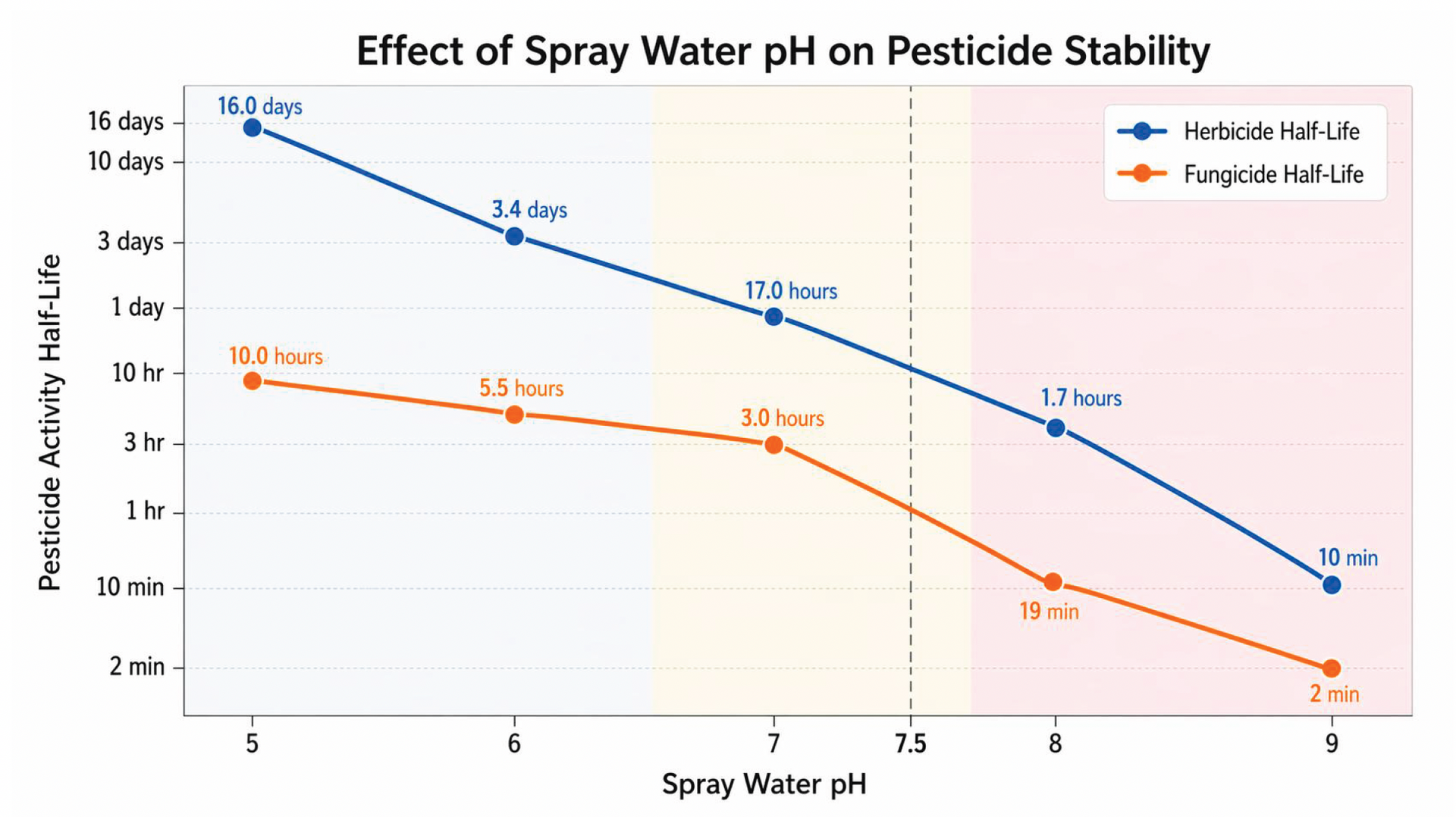
High pH spray water begins destroying product effectiveness before it even reaches the field. This is called alkaline hydrolysis. Most farmers have this problem and may be unaware. This is a factor in two common challenges faced by farmers every year.
- Herbicides do not always kill weeds completely
- Fungicide performance may be inconsistent
What is alkaline hydrolysis?
Michigan State University explains it this way, “The pH of water can negatively affect the stability of some pesticides. Under alkaline (high pH) conditions, alkaline hydrolysis occurs which degrades the pesticide to non-toxic (inactive) forms… the end result is less active ingredient applied and poor pesticide performance.”
Effect of water pH on the stability of pesticides, Annemiek Schilder, Michigan State University Extension, Department of Plant Pathology
5.0
IS THE NECESSARY pH TO MAXIMIZE YOUR PRODUCT EFFECTIVENESS
7.5
IS THE AVERAGE pH OF WELL WATER IN OUR MARKETING AREA
Why is Midwestern well water naturally high in pH?
Most midwestern groundwater passes through limestone and dolomite soils. Those minerals contain calcium carbonate and magnesium carbonate. When those minerals dissolve in water, they naturally buffer the water toward alkaline or high pH.
IS HIGH pH THE ONLY PROBLEM WITH WELL WATER? No, hard water is loaded with bicarbonates that also tie up pesticides.
“Another main component of carrier water quality that can dramatically affect herbicide efficacy is the presence of metal cations and hardness level of the water. Cations dissolved in water can interact with the herbicide structure and can form complexes and consequently reduce the absorption of the product into the plant. For example, calcium, magnesium, zinc, iron, and manganese…”
The Influence of Spray Water Quality on Herbicide Efficacy, Purdue Weed Science, www.btny.purdue.edu/weedscience
The Solution?
Nano pHlow™ is an advanced water conditioner that lowers solution pH, chelates bicarbonates in the water utilizing nanotechnology, increases dissolved oxygen levels, reduces crop stress through a unique biostimulant package, and functions as a powerful surfactant to enhance nutrient absorption and overall application efficiency.
What's the problem with getting agricultural products into plants?
Inefficiency. When we foliar spray herbicides, fungicides or plant nutrition products, all of those active ingredients go into plants one molecule at a time. They use the plant entry pathways of diffusion or active transport…one molecule at a time.

NanoBond™ DELIVERY TECHNOLOGY...
Nanoparticles can be loaded with active ingredients and enter the plant through endocytosis, allowing thousands of molecules to be delivered at once.
HISTORICALLY, HOW DO ACTIVE INGREDIENTS GET INTO PLANTS?
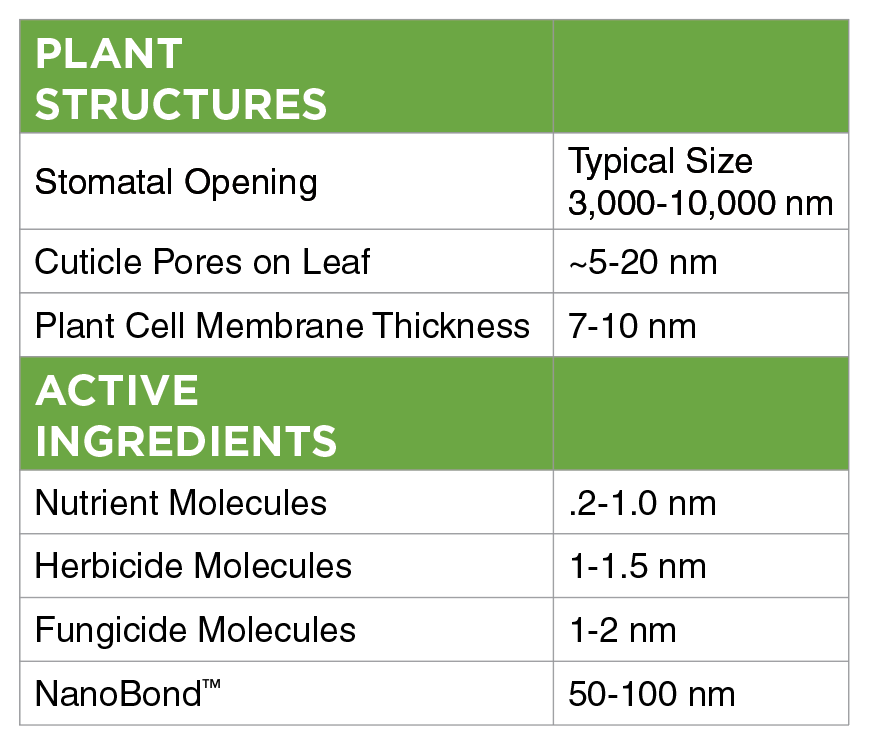
Cuticle pores and plant cell membranes are more than large enough to allow our agricultural inputs to pass through one molecule at a time. But there is an even more efficient delivery mechanism.

What is an endocytosis vesicle?
A small membrane-bound pocket that forms when the plant cell membrane folds inward and pinches off, trapping particles inside in a vesicle (small bubble). The vesicle then moves into the cell and releases the contents. What triggers the plant to use endocytosis for efficient delivery?
The Size of the Particle.
NanoBond™ nanoparticles are up to 100 nm in size with a huge internal volume relative to the active ingredient molecules, so many molecules can fit inside the nanoparticle. Loaded nanoparticles increase in size by 5-20% because they also can hold active ingredient molecules on the outside of the particle. This size triggers the endocytosis vesicle.
How many active ingredient molecules can one NanoBond™ nanoparticle hold?
It depends on the molecular size of the active ingredient. But, if you assume a 1 nm fungicide molecule, in theory, one NanoBond™ nanoparticle 100 nm in size could hold ~ 30,000 molecules on the outside and hundreds of thousands on the inside!
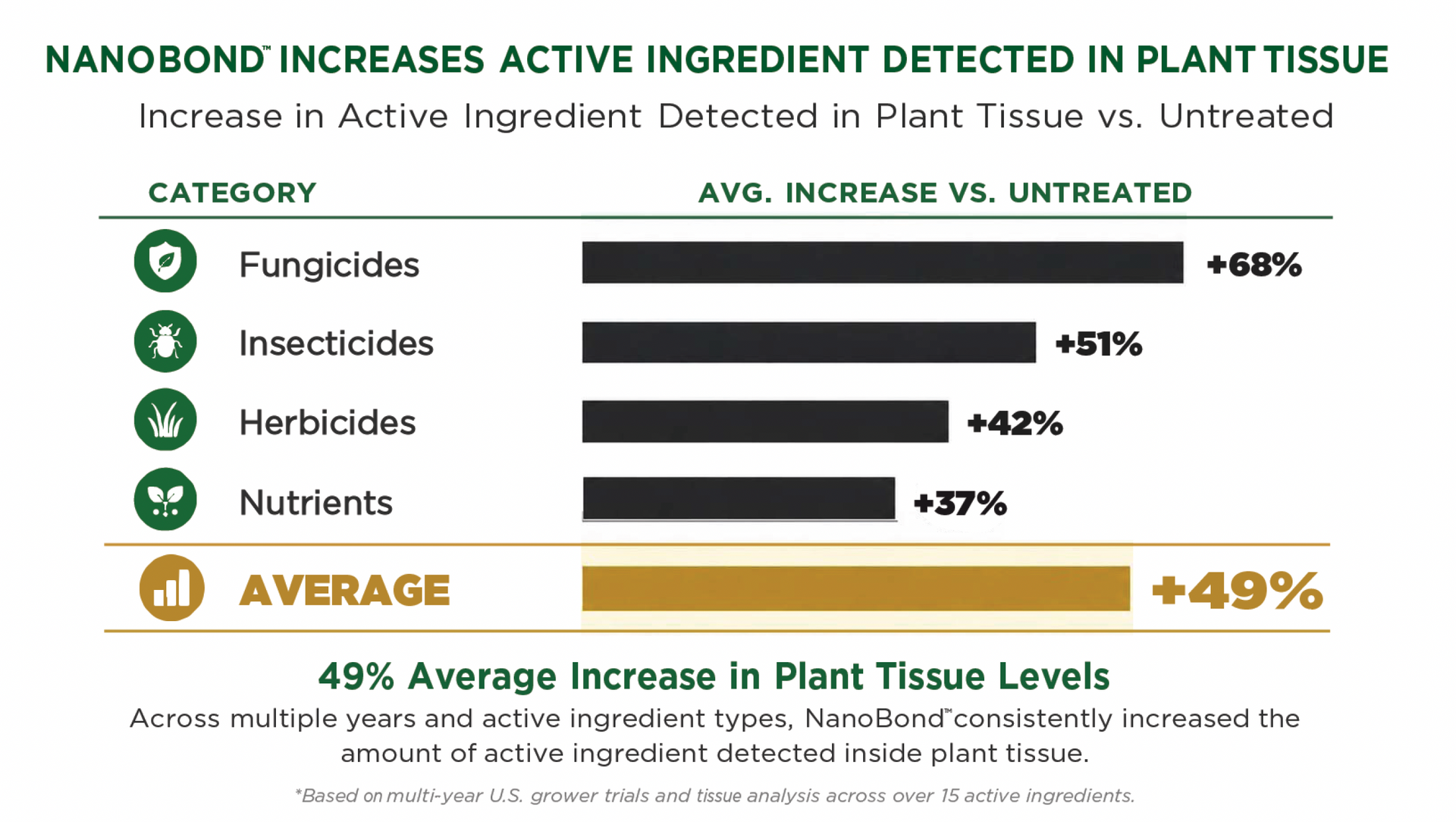
What are the results of loading active ingredient molecules onto the NanoBond™ nanoparticle?
As you can see from the data, NanoBond™
nanoparticles act as DELIVERY VEHICLES for active ingredients, helping you get more in where they can do what they were intended to do.
SOURCES:
Wang et al., Nanoparticles in Plants: Uptake, Transport and Physiological Effects, 2023, Chaud et al., Nanopesticides in Agriculture, 2021, Sembada et al., Transport of Nanoparticles into Plants, 2024, Wu et al., How Nanoparticles Cross Barriers in Plants, 2022, Mittal et al., Nanotechnology in Sustainable Agriculture, 2020, Almeida et al., Understanding Nanoparticle Endocytosis, 2021