








MAINTAIN SOIL pH BETWEEN 6.5–6.8
Maintain soil pH between 6.5 and 6.8, as it directly influences nutrient availability/cycling and residual herbicide performance.
STEP 1
- What is my low pH costing me? LEARN MORE
- How do I determine how much lime I need when my pH is low? LEARN MORE
- Are there any negative effects from a soil pH higher than 8.5? LEARN MORE
What is my low pH costing me?
Tri-State Fertilizer Recommendations, Bulletin 974, page 13
“Soil pH is one of the most important properties in determining the cycling and availability of soil nutrients. Soil testing regularly and applying lime to maintain recommended pH levels should be the first step growers take to assure crops have sufficient availability of nutrients.”
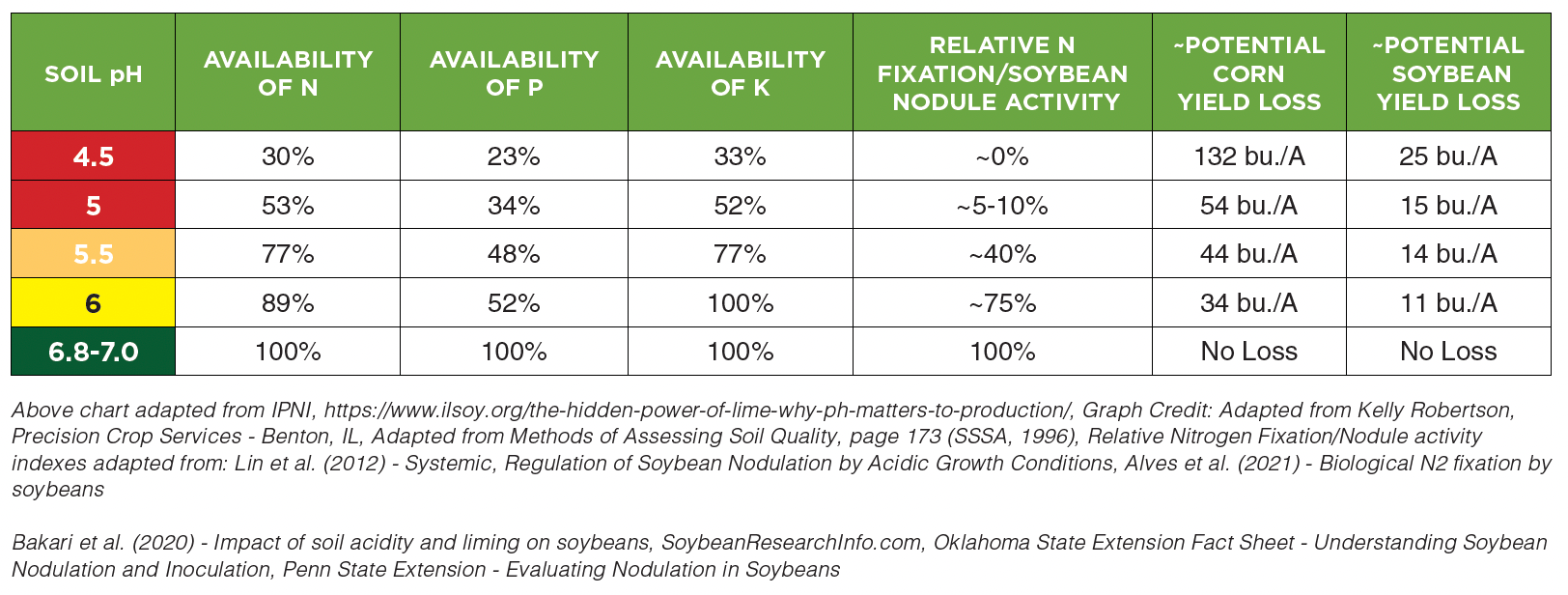
Because of the tremendous importance of soil pH, we have made it STEP 1 of TAPS™! See the data below toback up the incredible importance of maintaining a proper soil pH range.
IMPACT OF NUTRIENT AVAILABILITY AND CROP YIELD LOSS
KEY TAKE-AWAY
Soil pH strongly influences nutrient availability and soybean nitrogen fixation, with acidic soils dramatically
reducing both. As pH approaches 6.8–7.0, nutrient uptake and nodulation reach optimal levels, minimizing
potential yield losses in corn and soybeans.
How do I determine how much lime I need when my pH is low?
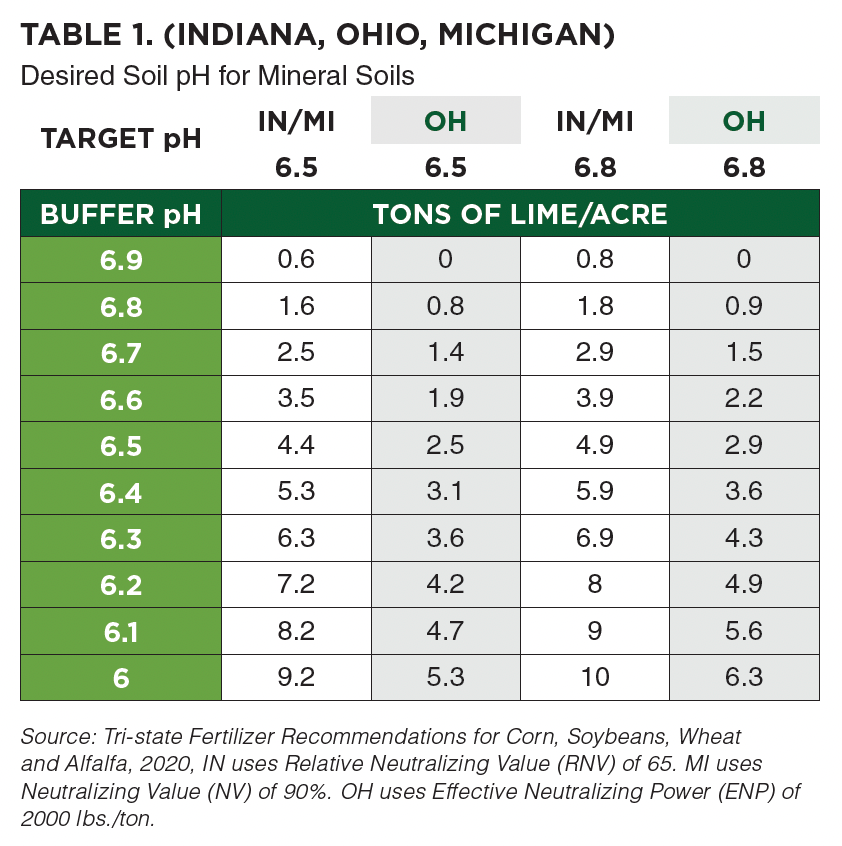
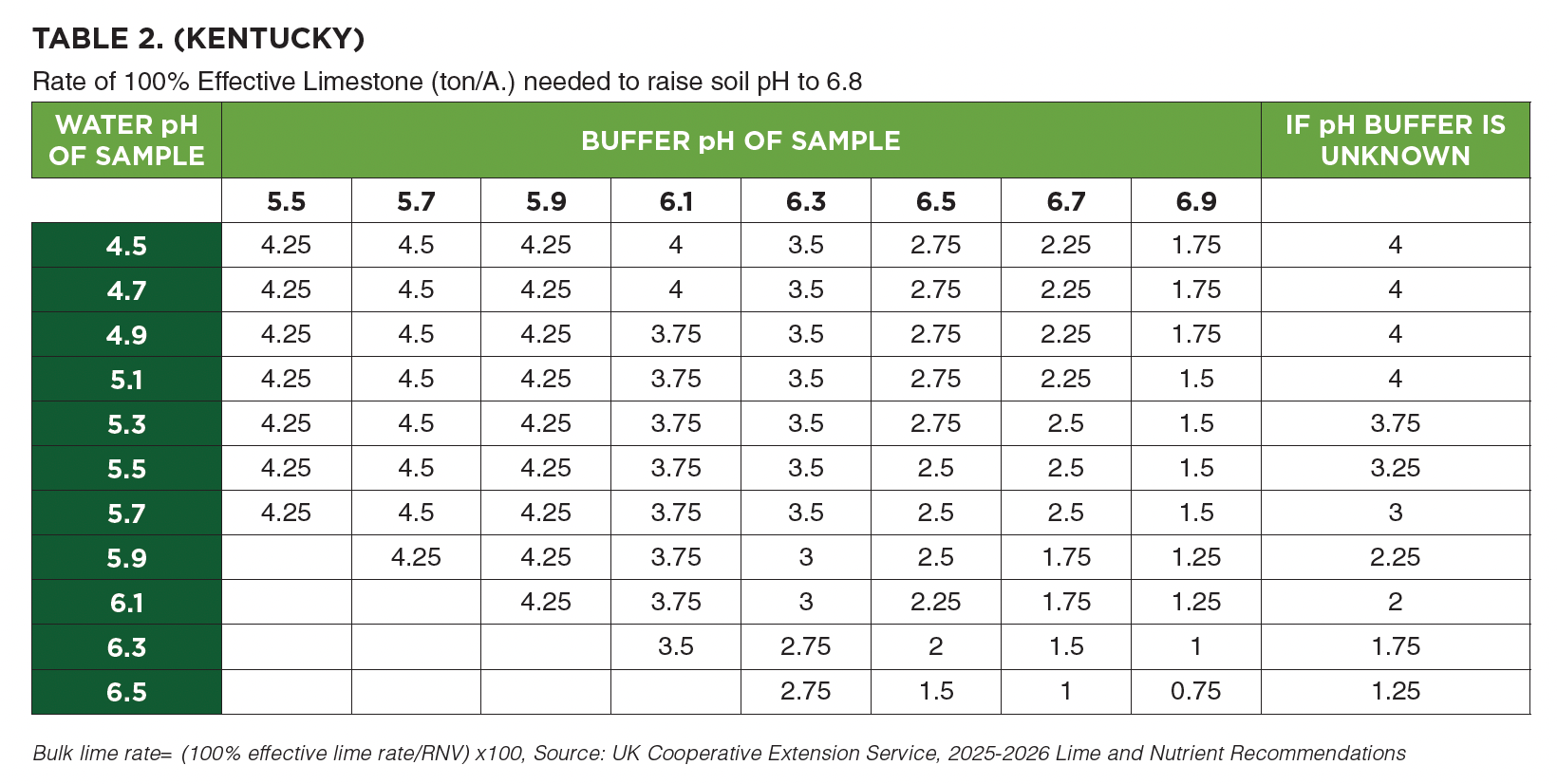
We have provided lime rate application tables from four of the states that utilize soil pH and buffer pH (BpH) to generate lime recommendations. Other states have more complex equations to determine rates. Please check your local university if you are outside of the states of IN, OH, MI and KY.
AG LIME
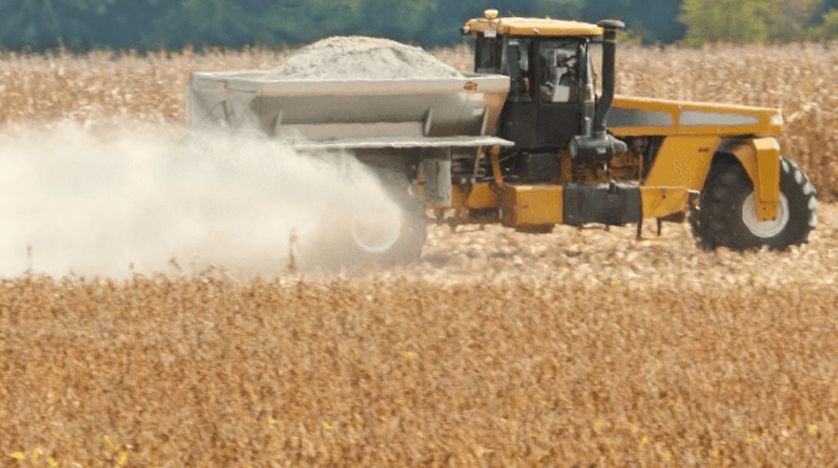
Ag lime (agricultural lime) not only neutralizes acidic soils but can quietly boost crop yields by unlocking nutrients that were previously trapped and unusable to plants.
KEY TAKE-AWAY
Soil pH and buffer pH together determine lime requirements, with lower pH soils needing significantly more lime
to reach optimal levels. As buffer pH increases, the amount of lime required drops, highlighting the importance of
accurate testing to avoid under- or over-application.
Are there any negative effects from a soil pH higher than 8.5?
According to Pioneer Agronomy Sciences and its publication, Corn Management in High pH Soil, there are several reasons why you should prevent your soil pH from increasing too much.
- DECREASED MICRONUTRIENT AVAILABILITY - “All micronutrients, with the exception of molybdenum, decrease in availability as the pH increases above 7.5 in the soil.”
- ZINC DEFICIENCY – “There is a high probability that the crop will respond positively to applied zinc… if the soil has a pH greater than 7.3.”
- PHOSPHORUS DEFICIENCY – “At soil pH levels above 7.2, P fixes as insoluble calcium phosphates.”
Source: https://www.pioneer.com/us/agronomy/high-ph-soils-management.html
CHICKEN LITTER USERS
It has been our experience, specifically with farmers utilizing layer chicken manure, that over time, soil pH levels can creep too high and induce both zinc and phosphorus deficiencies, even in the presence of high soil P levels. Continue to soil sample and manage for soil pH in the 6.5-6.8 range. This could mean that some fields get layer manure discontinued for some time and reallocated to other fields with lower soil pH levels.

DANNY GREENE & TYLER GABEHART
GREENE CROP CONSULTING, INC.
Franklin, IN
“Every successful fertility plan begins with a strong foundation. That’s why we focus first on soil pH and balanced calcium and magnesium base saturations — the key building blocks that influence nutrient availability, soil structure, and overall crop performance.”