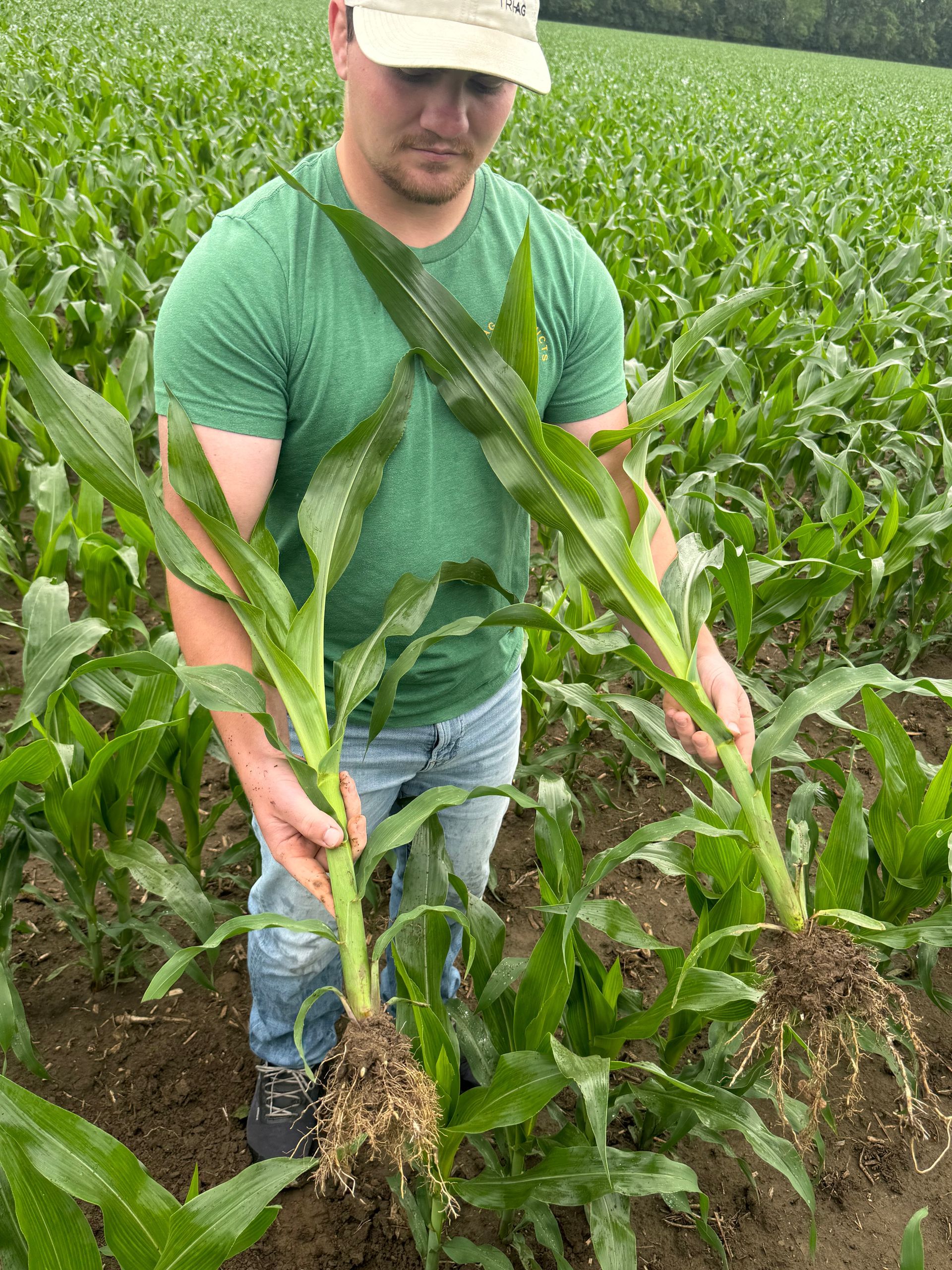




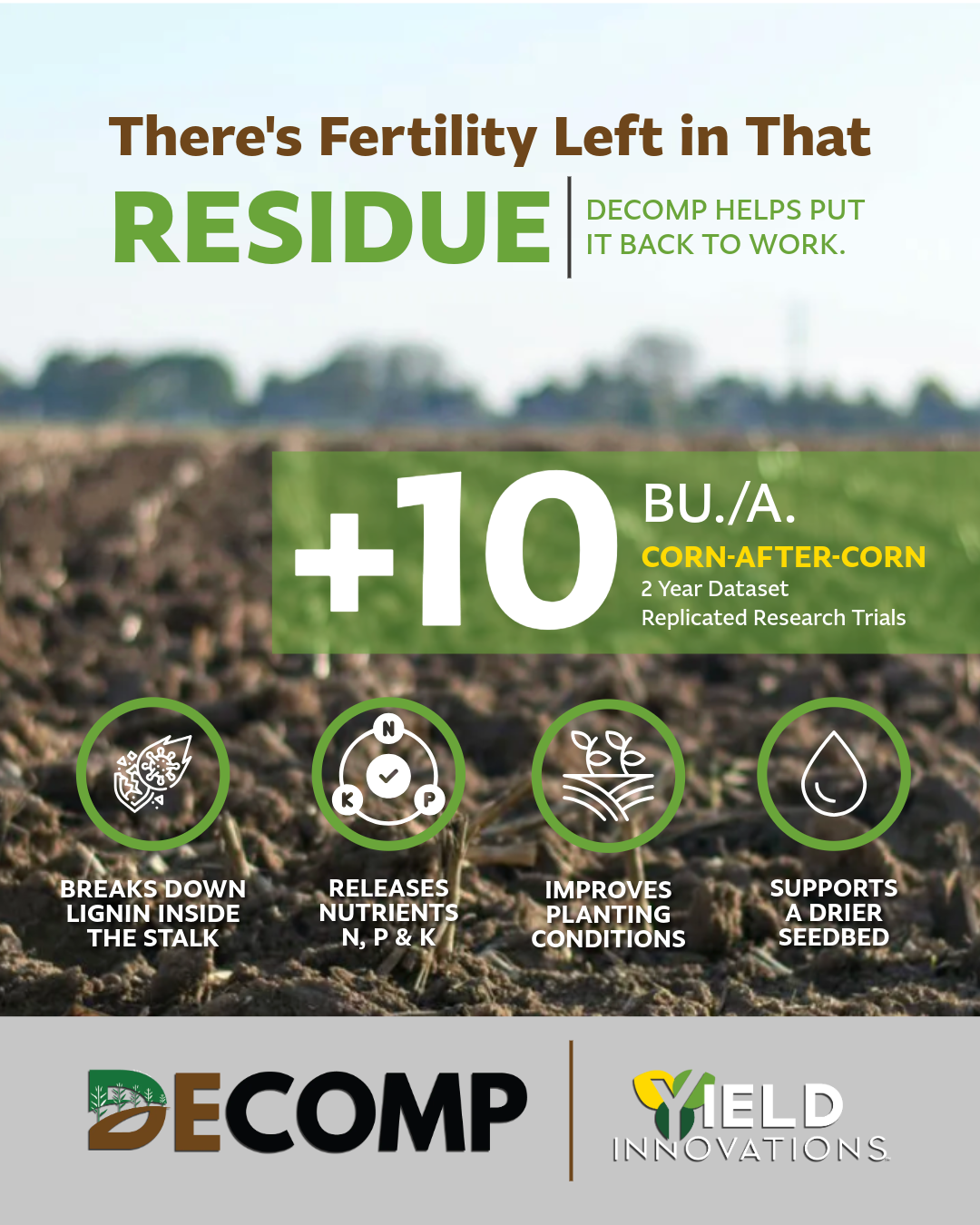
There’s still fertility sitting in that corn residue. DECOMP™ is designed to help put more of it back to work. DECOMP is a complete biological residue-management system that works to accelerate the breakdown of stal ks, leaves and root balls while moving crop-bound fertility back into active nutrient cycling. And the latest data gives us a closer look at what that can mean. In a Michigan leachate study, corn residue treated with DECOMP showed higher captured levels of potassium, phosphorus and nitrogen after 30–60 days compared to untreated residue. Replicated corn-after-corn research has also shown a +10 bu./A yield response across a two-year dataset. The goal isn't just residue that disappears faster. It's breaking down lignin, releasing held nutrients and creating better planting conditions for the crop that follows. Get more from the fertility you've already paid for. Talk with your Yield Innovations Consultant about w here DECOMP fits this fall.
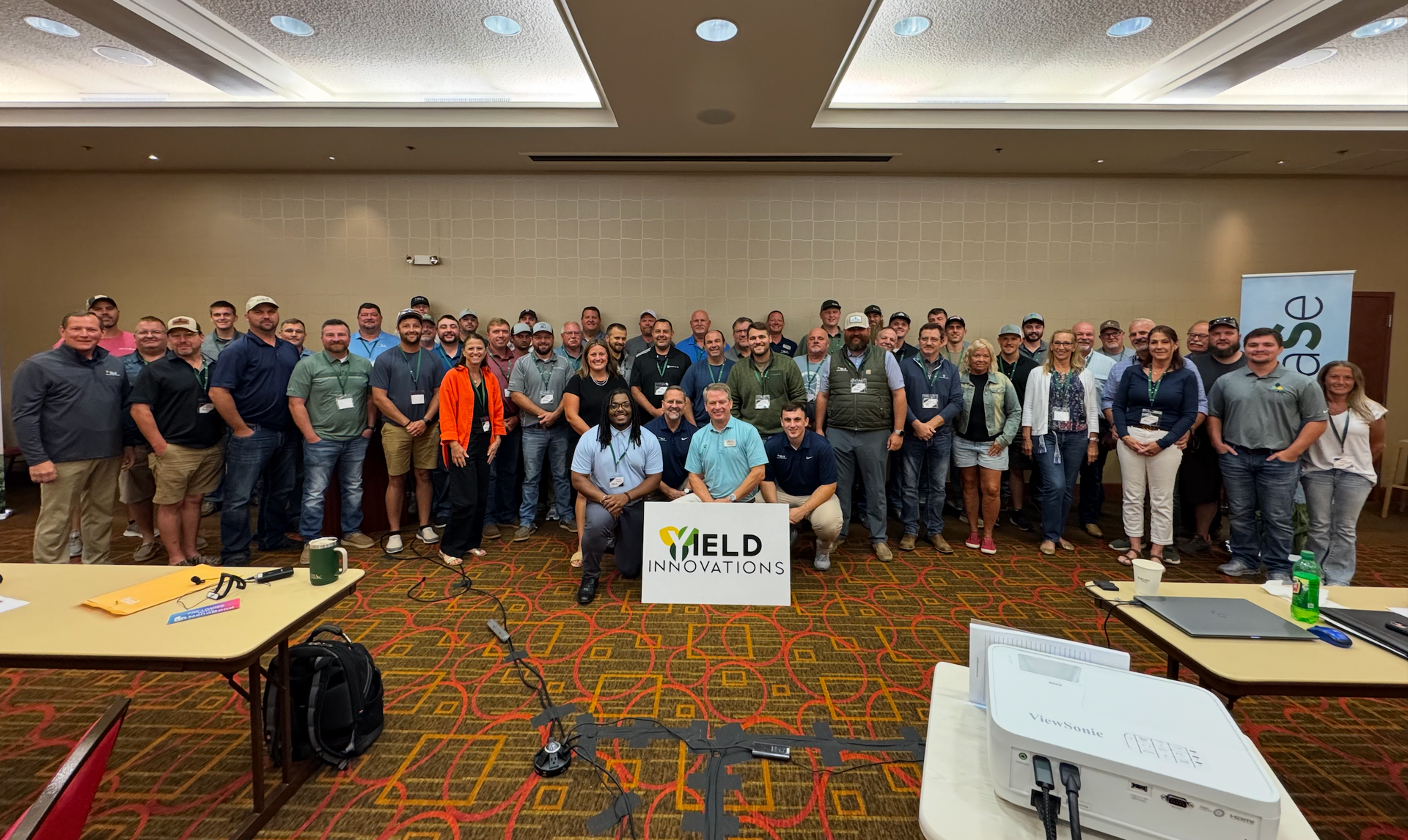
The 2027 Yield Summit brought the Yield Innovations team, Yield Consultants, industry partners, and agronomic experts together for two days focused on one thing: building stronger, more profitable farming systems for the future.

Yield Innovations announced the launch of YieldOS™, a technology platform designed to deliver personalized Agronomic Profit Systems™ that help farmers make more intentional, confident, and profitable decisions.
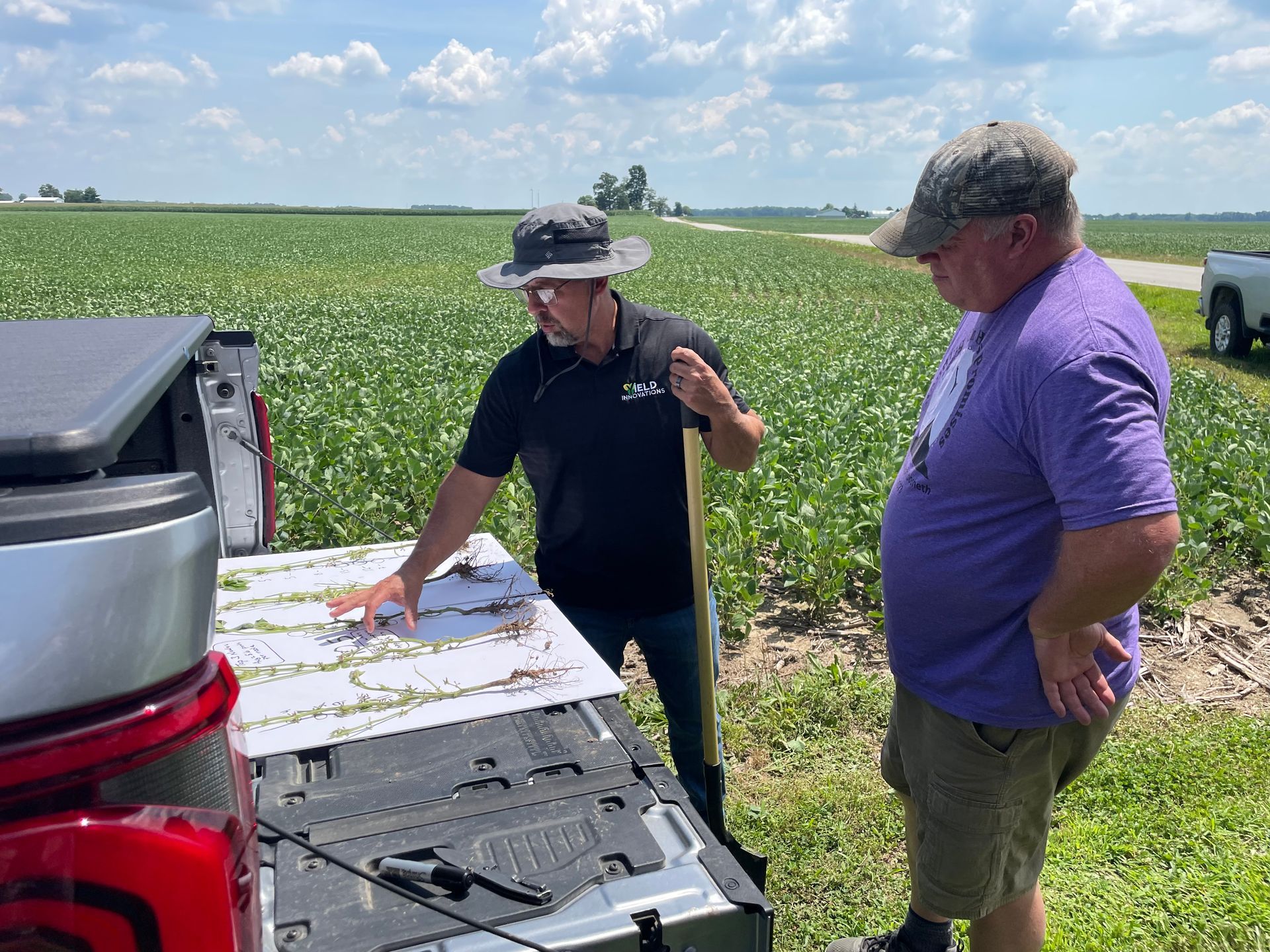
Greene Crop Consulting is digging into an in-furrow trial and comparing root development side-by-side. The difference in nodal root growth was hard to ignore.
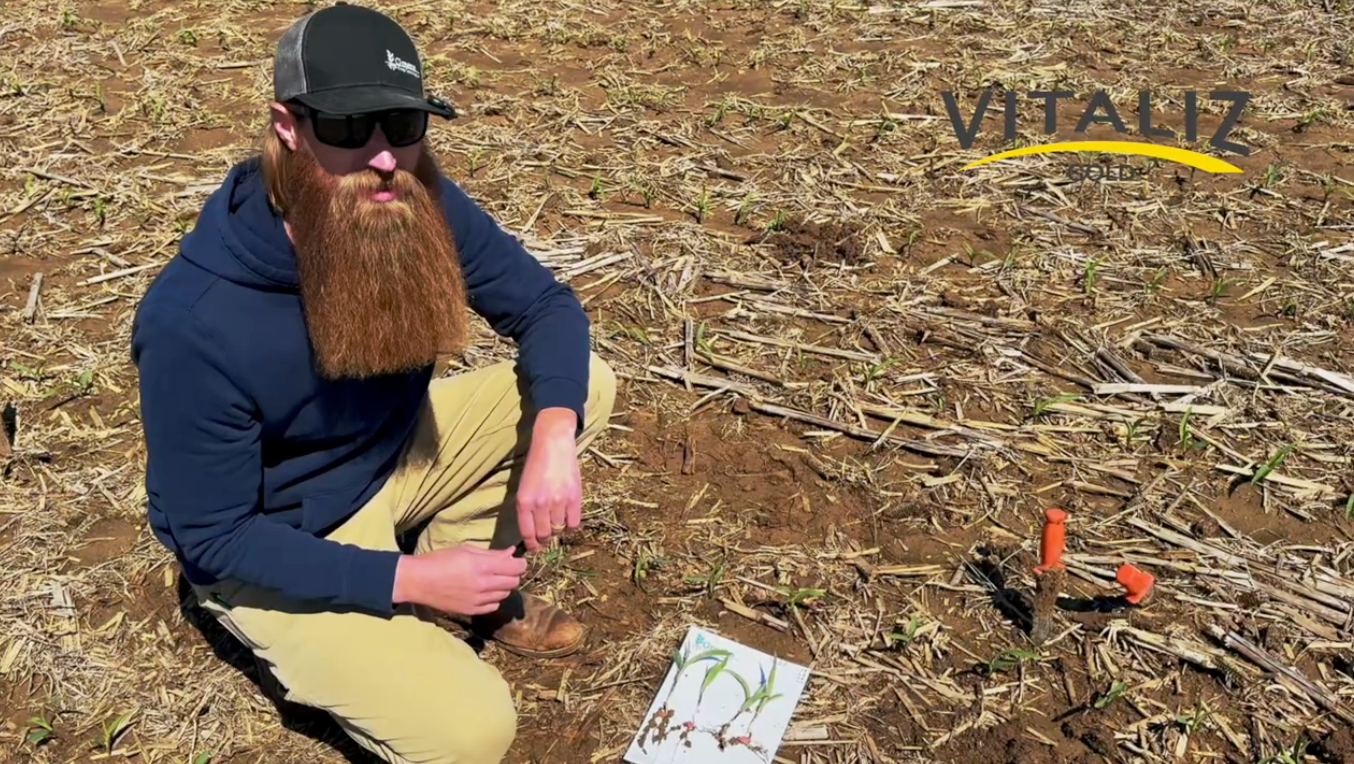
Greene Crop Consulting, Inc. shares an early-season corn field update from Shelby County, Indiana, just 17 days after planting.
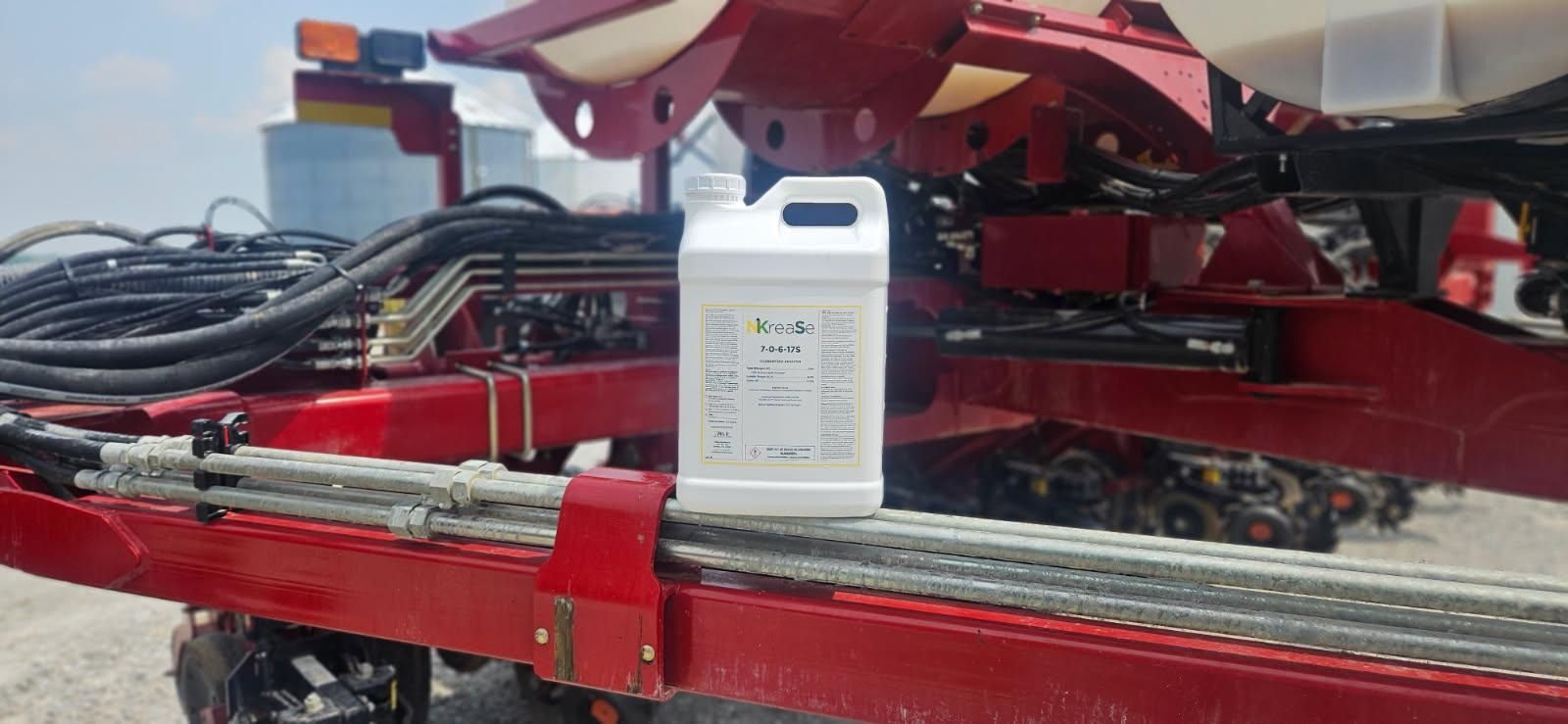
Boost sidedress performance with NKreaSe. A 7-0-6-17S solution built to improve nitrogen efficiency and replace traditional Thio-Sul programs.
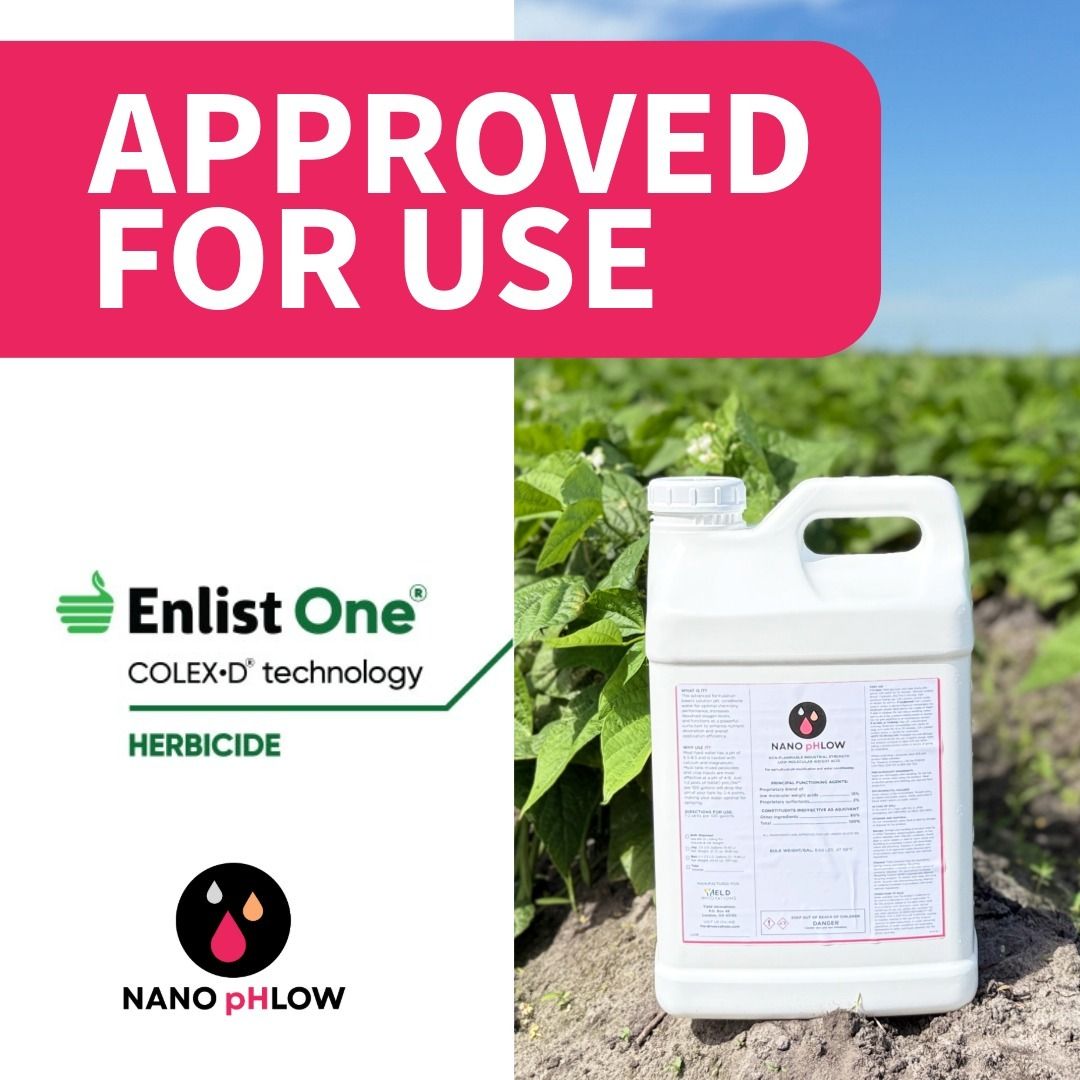
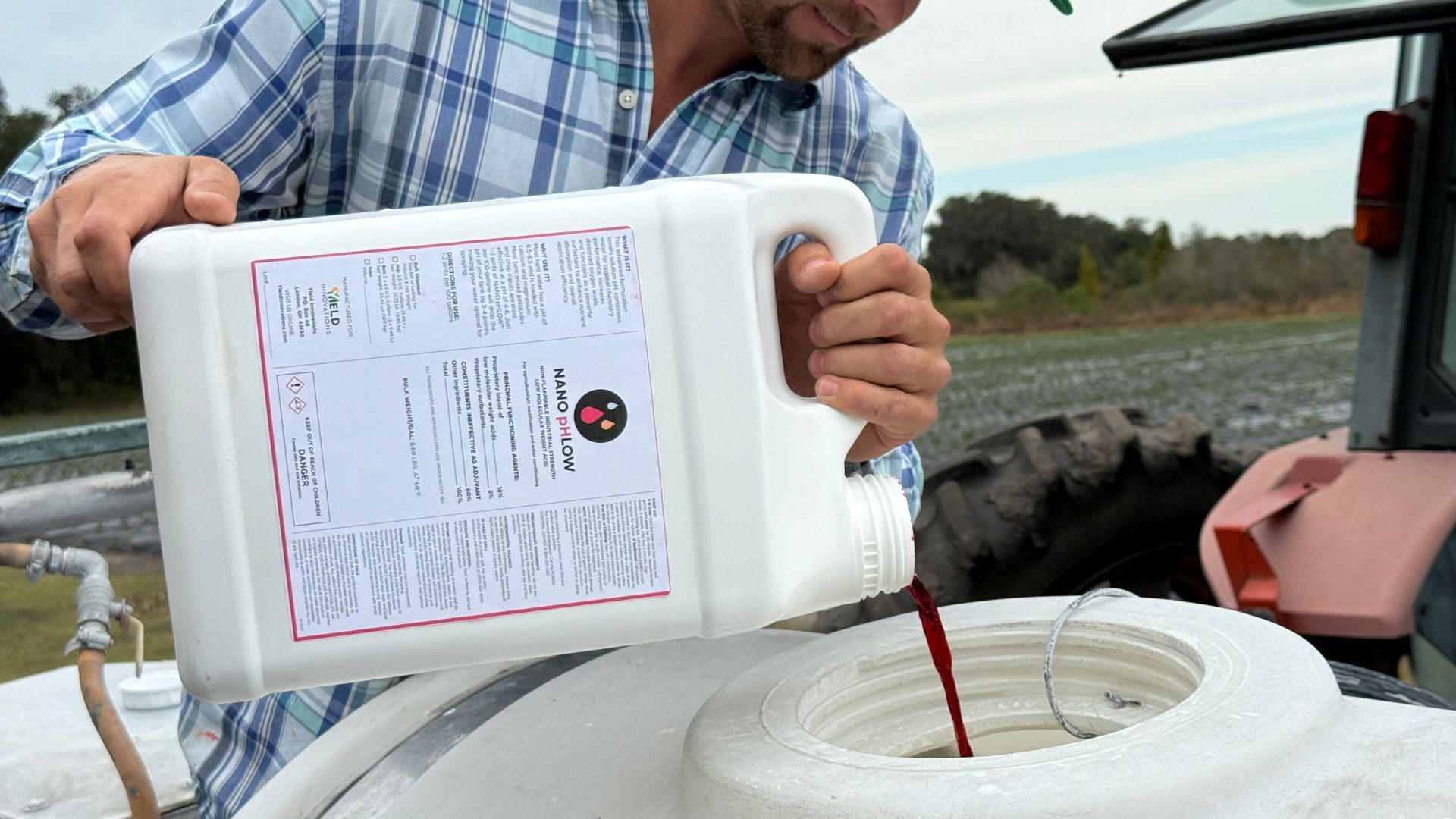
NANO pHLOW™ conditions carrier water for Enlist One® applications—improving pH, droplet behavior, and overall spray consistency.

Spring Cleaning Time! Here’s your checklist of activities to complete before planting for seed, chemistry, and nutritional products.
NanoBond is built on advanced nanotechnology designed to keep essential elements stable, soluble, and available for plant uptake. Traditional formulations often become tied up in the soil or tank, reducing their efficiency before they ever reach the plant. NanoBond prevents that loss by working at the molecular level.
Getting your planting season off to the right start begins in the tank. From better spray coverage to cleaner water and fewer drift issues, the LeafBond® Adjuvant lineup helps every pass perform at its best.